Colorado landscaping doesn't have to mean choosing between a thirsty green yard and a property covered entirely in rock.
There is a much better middle ground.
Thoughtfully designed landscapes can incorporate native and Colorado-adapted plants to provide color, texture, movement, habitat, and seasonal interest while being better suited to our regional conditions.
For homeowners in Loveland, Fort Collins, Windsor, Greeley, Berthoud, Johnstown, and throughout Northern Colorado, native plants can be an excellent addition to a professionally designed landscape.
Why Consider Colorado Native Plants?
Native plants have adapted to Colorado's environmental conditions over long periods of time.
When planted in appropriate locations, they can provide several advantages.
Properly sited native plants can often require fewer external inputs such as water and fertilizer and may be better suited to certain local pest, disease, and climate pressures.
They can also provide valuable habitat and help give a landscape a distinct sense of place.
In other words, your yard can actually look like it belongs in Colorado.
Native Doesn't Mean No Water
One misconception deserves attention.
Native does not automatically mean "never needs irrigation."
Newly installed plants need water while establishing roots, and supplemental irrigation may still be necessary depending on species, site conditions, and rainfall.
The goal is to put the right plant in the right location and design irrigation around actual plant needs.
Great Native Perennials for Colorado Landscapes
Perennials are one of the easiest ways to add seasonal color.
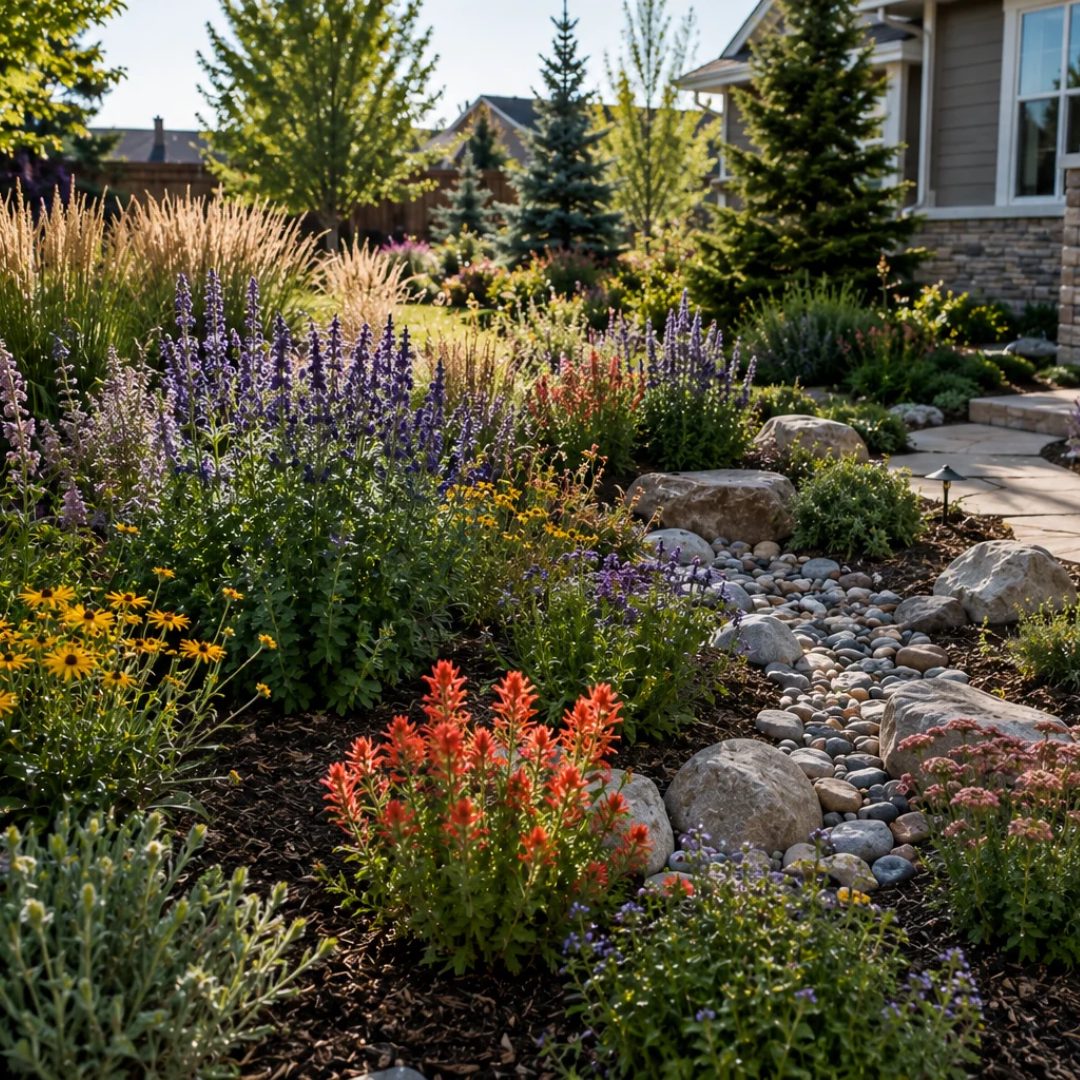
Options that can be considered for appropriate Front Range landscapes include plants such as Rocky Mountain penstemon, blanket flower, prairie coneflower, and bee balm.
Rocky Mountain penstemon is known for striking blue-purple flowers and a distinctly Colorado appearance.
Blanket flower adds warm color and works beautifully in informal, water-wise planting designs.
Prairie coneflower provides an interesting native prairie aesthetic and works well alongside ornamental grasses.
Bee balm can provide attractive flowers and pollinator value.
The important point is not simply choosing a plant because it is native, but matching each plant to the specific site.
Add Movement With Native Grasses
Ornamental grasses are extremely useful in Colorado landscape design.
They introduce texture and movement, provide fall and winter interest, and pair beautifully with flowering perennials.
Native and water-wise grasses can also offer alternatives to conventional high-water turf in appropriate areas.
That doesn't mean you need to eliminate your lawn.
Instead, think strategically.
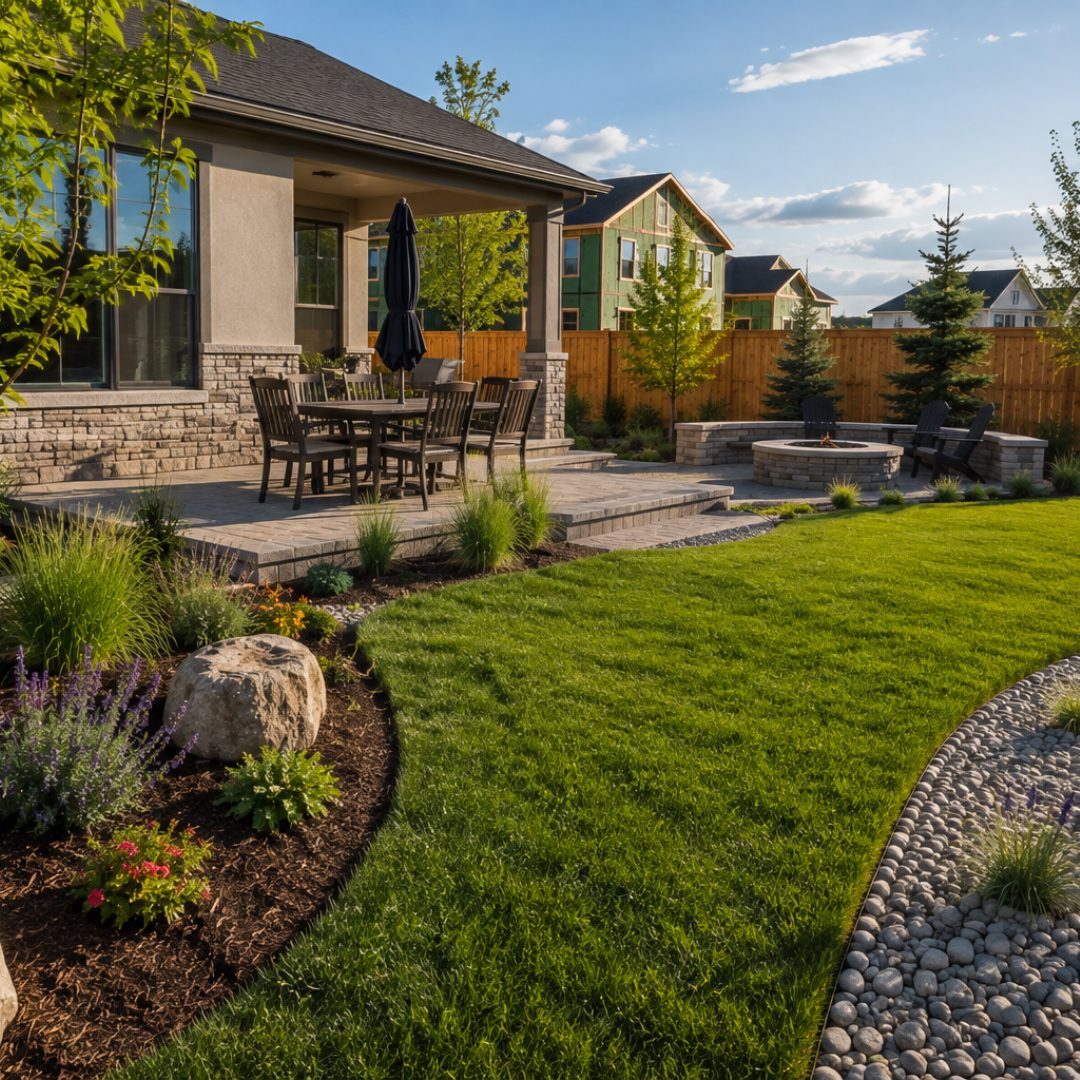
Keep traditional turf where it serves a purpose and use ornamental or native grasses where mowing isn't necessary.
Shrubs Create Structure
Perennials provide color, but shrubs give planting beds structure.
A strong landscape design usually includes multiple layers rather than filling every bed with plants of the same height.
Shrubs can help provide privacy, seasonal color, screening, texture, wildlife value, and transitions between trees and smaller plants.
Rabbitbrush, for example, can provide distinctive late-season color and a natural Colorado aesthetic in appropriate settings.
The exact plant palette should always be selected based on the property's sun, soil, moisture, available space, and design style.
What About Trees?
Trees are among the most important long-term investments in a landscape.
They can provide shade, privacy, vertical scale, seasonal interest, and structure.
But tree selection requires careful planning.
Consider the tree's mature size, not the size you see at the nursery.
Planting a tree too close to a home, patio, walkway, or other feature can create unnecessary problems years later.
A landscape designer can select trees based on the site's space, exposure, soil, irrigation, and desired function.
Use Hydrozoning for Smarter Irrigation
One of the smartest ways to create a water-conscious landscape is to group plants according to their water requirements.
This is sometimes called hydrozoning.
Low-water plants shouldn't necessarily be placed on the same irrigation schedule as thirsty turf.
Professional irrigation and landscape design can work together to make these zones intentional.
Native Landscaping Doesn't Have to Look Wild
Some homeowners hear "native landscape" and imagine an overgrown meadow.
It doesn't have to look that way.
Native plants can be incorporated into highly refined landscape designs.
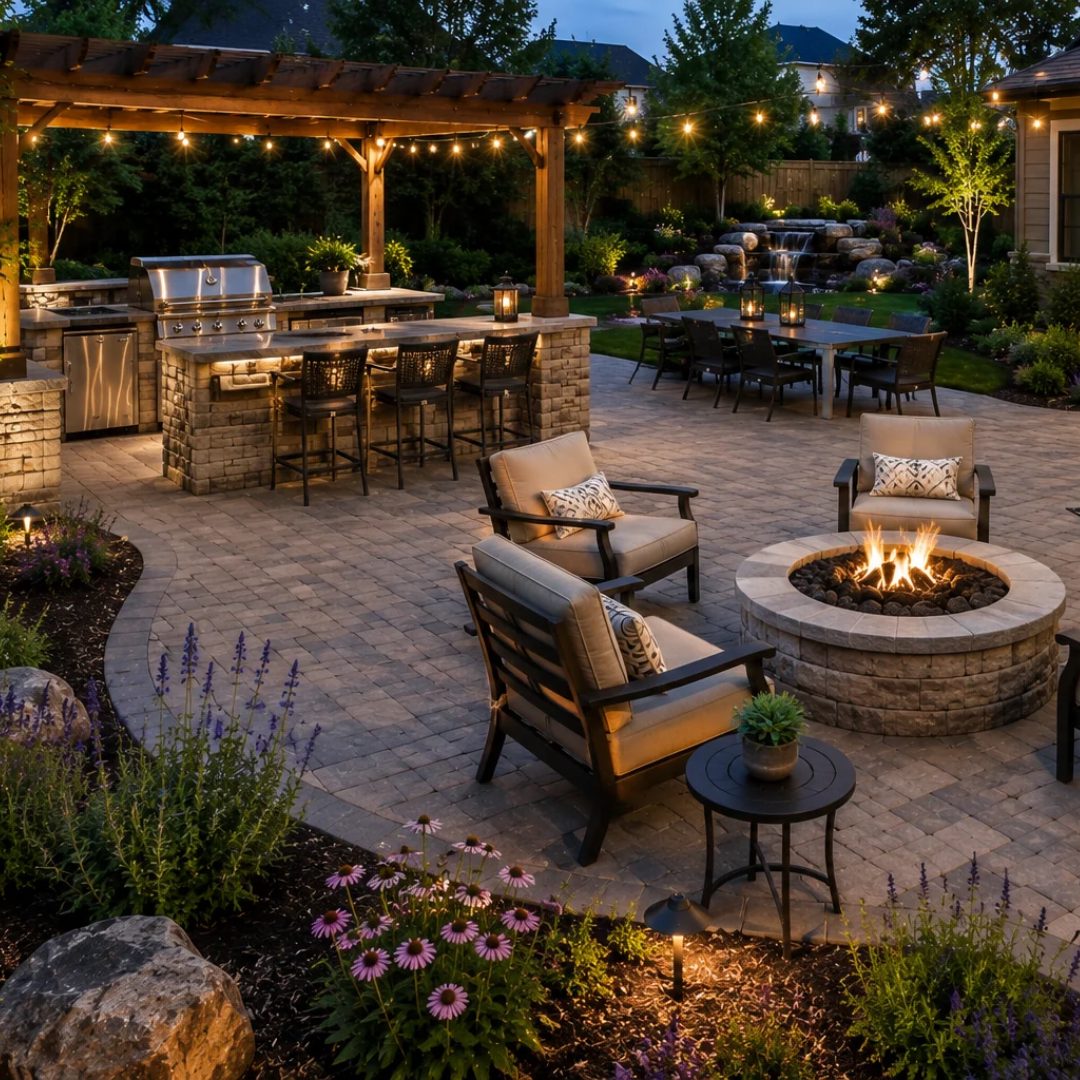
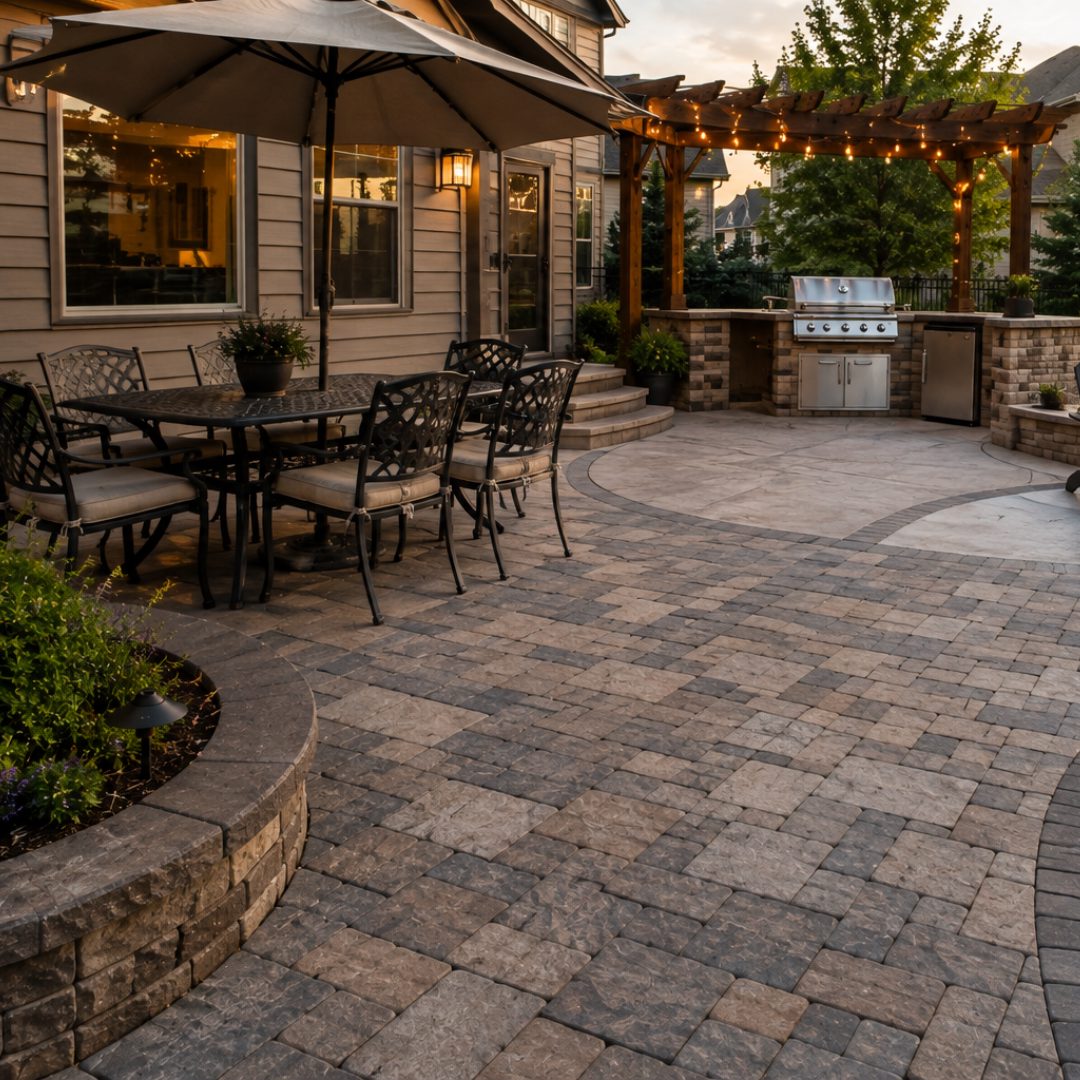
Clean paver edges, intentional plant groupings, decorative rock or mulch, defined pathways, architectural features, ornamental grasses, and carefully repeated colors can create a polished appearance while incorporating native species.
The difference is design.
A collection of plants is not necessarily a landscape design.
Mix Native and Adapted Plants
You don't have to make every plant on your property native to Colorado.
A sophisticated Northern Colorado landscape can blend natives and well-adapted ornamentals to achieve the desired appearance while remaining practical for our climate.
The key is choosing plants whose light, moisture, soil, and temperature requirements fit the site.
Reduce Turf Strategically - Not Necessarily Completely
Turf still serves an important purpose.
Families may want lawn for children, pets, recreation, entertaining, or simply because they enjoy its appearance.
The goal isn't necessarily to remove every blade of grass.
Instead, ask: where does lawn provide value?
Keep it there.
Unused corners, steep areas, narrow strips, and difficult-to-irrigate locations can potentially become planting beds, native areas, or hardscape.
Create a Landscape That Belongs in Colorado
Northern Colorado's landscape is part of what makes living here special.
Your property can reflect that character while still feeling polished, modern, colorful, and inviting.
Native and Colorado-adapted plants can be combined with patios, walkways, irrigation, lighting, ornamental grasses, trees, and carefully planned turf to create a complete outdoor environment.
Belmire Premier Landscape Solutions has more than 50 years of experience serving the Loveland community and provides residential landscape and hardscape design and construction throughout Northern Colorado.
Ready to rethink your landscape? Contact Belmire Premier Landscape Solutions to create a professionally designed Northern Colorado landscape built around your home, lifestyle, and property.